
Overview
In this section you will get an overview of the condition and its relevance to your health.
Malaria is one of the most important tropical medicine diseases and can -- depending on the pathogen and course -- be life-threatening. It is caused by Plasmodium parasites and transmitted through bites from Anopheles mosquitoes.
Whether medication prophylaxis is advisable depends greatly on the travel destination, season, duration of travel, travel style, and individual risk factors. In some regions, consistent mosquito protection is sufficient; in others, prophylactic medication is strongly recommended.
The good news: with good mosquito protection and -- when indicated -- appropriate medications, the risk can be significantly reduced. A medical online consultation can help determine the right prophylaxis for your specific travel destination.
What is it?
Here you will learn what medically characterizes this condition and how it is defined.
Malaria prophylaxis encompasses measures intended to prevent a malaria infection. These include:
- Exposure prophylaxis: consistent protection against mosquito bites
- Chemoprophylaxis: preventive medication
- In certain situations: standby emergency treatment (emergency medication)
The selection depends on the malaria risk and resistance patterns in the destination area. Particularly dangerous is Plasmodium falciparum (malaria tropica).
Causes
The following information explains which factors can contribute to the development of this condition.
Malaria is transmitted through bites from infected Anopheles mosquitoes. Risk increases with:
- Stays in high-risk areas
- Rainy season (more mosquitoes)
- Rural regions, simple accommodations
- Nighttime activities without protection
Individual factors also play a role: pregnancy, children, immunosuppression, or pre-existing conditions increase the risk of complications.
Symptoms
This section describes the typical signs and symptoms you should watch for.
Malaria typically presents with:
- Fever (often recurring, but not always typical)
- Headache and body aches
- Chills
- Nausea, diarrhea
- Pronounced fatigue
Warning signs: high fever, altered consciousness, shortness of breath, jaundice, circulatory problems. After stays in risk areas, the rule is: fever is an emergency until malaria is ruled out.
Diagnosis
Below you will learn how this condition is detected through medical examinations.
Diagnosis is made through blood tests (thick blood smear, thin smear, rapid test). Testing must be performed immediately when malaria is suspected -- even if symptoms are nonspecific.
Online, a pre-travel risk assessment, medication selection, and mosquito protection counseling can be provided. If fever occurs after travel, immediate in-person medical evaluation is required.
Treatment
Here the available therapy options and their modes of action are explained.
Prophylaxis is not a one-size-fits-all treatment -- it is individually selected.
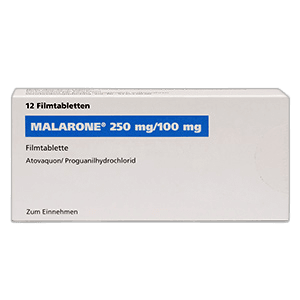
Atovaquone/proguanil (e.g., Malarone):
- Good tolerability, short lead-in and follow-up time
- Side effects: gastrointestinal complaints, headache
Doxycycline:
- Also effective against other infections
- Side effects: stomach irritation, photosensitivity
- Not suitable during pregnancy or for children (medical evaluation required)
Mefloquine:
- Weekly dosing possible
- Side effects: neuropsychiatric complaints possible; therefore careful suitability assessment
Important contraindications vary by medication (e.g., pregnancy, psychiatric history, liver/kidney function). This must be medically reviewed.
Regardless of the medication: mosquito protection is always necessary.
Available medications
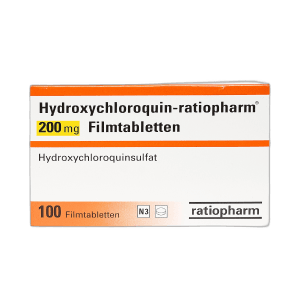
Various prescription medications are available for treatment. Click on a medication to learn more about its effects, dosage and side effects.
Prevention
This section provides guidance on prevention and reducing risk factors.
Exposure prophylaxis is always mandatory:
- Repellent with DEET/icaridin
- Long clothing in the evenings/at night
- Impregnated mosquito nets
- Air-conditioned rooms/window screens
Medication prophylaxis should only be used after individual risk assessment for the specific destination.
FAQ
Here you will find answers to frequently asked questions on this topic.
Would you like a medical assessment?
Fill out the medical questionnaire. A licensed doctor will review your information and recommend a suitable therapy if appropriate.
Important notice
This content is for general information only. In case of severe pain, shortness of breath, impaired consciousness, fever > 39°C or rapidly worsening symptoms, please seek immediate medical help ().
Related treatments
More treatments from the Reisemedizin area that might interest you.