
What is metoprolol?
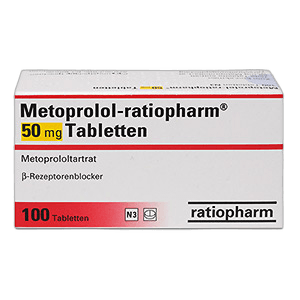
Metoprolol is a cardioselective beta-1-receptor blocker and one of the longest used beta blockers. It is used for the treatment of high blood pressure, angina pectoris, cardiac arrhythmias, for the prevention of heart attack and heart failure.
Metoprolol is available in two salt forms: metoprolol succinate (retard form, for example Beloc Zok) for a uniform action over 24 hours and metoprolol tartrate (for example MetoHEXAL®, Metoprolol 50-1 A Pharma®) with a shorter duration of action. The retard form is preferred since it has to be taken only once a day.
Metoprolol is also used for the treatment of functional heart problems (heart grasses when excited) and for migraine prophylaxis.
Active Ingredients & Mechanism of Action
Active ingredient: Metoprolol
Metoprolol selectively blocks the beta-1 receptors at the heart:
Active mechanism:
- Cardioselective Beta-1 blockade
- Lowers heart rate and blood pressure
- Reduces heart oxygen consumption
- Reduces the renin distribution
Two forms of preparation:
- Metoprolol tartrate: rapid action, duration of action 8-12 hours, 2-3x daily
- Metoprolol succinate (Retard/Zok): uniform release, effective duration 24 hours, 1x daily
Additional effects:
- Antiarrhythmic action (Grades II)
- Protection from chamber flutter after heart attack
- Migraine prophylactic action
- Anxiolytic effect in lamp fever and test ant
Initiation of action: Metoprolol tartrate: after 1-2 hours. Metoprololsuccinate (retard): uniform level of action over 24 hours.
Who is it suitable for?
Metoprolol is suitable for:
- Adults with high blood pressure
- Angina pectoris (stable and unstable)
- Heart rhythm disorders (tachyarrhythmia)
- Chronic heart failure (stable, NYHA II-IV)
- After heart attack (secondary prevention)
- Migraine prophylaxis
- Functional heart complaints
Especially recommended at:
- High blood pressure with tachycardia
- coronary heart disease
- Heart failure as additional therapy
- Preventive dimmers for frequency control
Not suitable:
- Heavy asthma bronchiale
- AV block II/III. Grades
- Heavy bradycardia (under 50/min)
- Decompensated heart failure
- Cardiogenic shock
Available Dosages
High blood pressure (Metoprololsuccinate/Retard):
- start dose: 47.5 mg (or 50 mg) once a day
- usual dose: 95-190 mg once a day
- Maximum dose: 190 mg daily
High blood pressure (Metoprolol tartrate):
- start dose: 50 mg twice a day
- usual dose: 100-200 mg daily (divided)
- Maximum dose: 200 mg daily
Herzinsufficiency (metoprolol succinate only):
- Start dose: 23.75 mg once a day
- Slow increase every 2 weeks
- Target dose: 190 mg once a day
Available starches:
- tartrate: 50 mg, 100 mg, 200 mg
- Succinate (retard): 23.75 mg, 47.5 mg, 95 mg, 190 mg
Accredited preparations:
- Beloc Zok (Metoprololsuccinate)
- MetoHEXAL® (Metoprolol tartrate)
- Metoprolol 50 - 1 A Pharma®
How to Take
Intake of metoprolol succinate (retard/zoo):
- Once a day, preferably morning
- Independent meals
- Swallow tablet with water
- Do not share or clog retard tablets
Intake of metoprolol tartrate:
- twice a day (morning and evening)
- At or after meals (improved reception)
- Tablets can be shared
Important notes:
- Never stop abruptly – slowly sneak out!
- Regular pulse and blood pressure control
- Informing anaesthesia before operations
- In diabetics: control blood sugar tightly
Contraindications
**Metoprolol must not be taken at:* *
- hypersensitivity to metoprolol or other beta blockers
- AV block II/III. Grades
- Decompensated heart failure
- Heavy bradycardia (under 50/min)
- Sick sine syndrome (without pacemaker)
- Cardiogenic shock
- Heavy hypotension
- Heavy asthma bronchiale
- Untreated phenochromocytoma
Preview at:
- Light asthma or COPD (optionally low dose)
- Diabetes mellitus
- Peripheral blood circulation disorders
- Psoriasis
- Depression
pregnant: Only with strict indication. Can lead to fetal brady and growth delay. Close monitoring is necessary.
Possible Side Effects
Acid (1-10%):
- Tiredness, dizziness
- Bradykardie (slow pulse)
- Cold extremities
- Gastrointestinal complaints
- Headaches
** Occasionally (0,1-1%):* *
- Weight gain
- Depressive detuning
- Sleep disorders, nightmares
- Potency disorders
- Skin rash
- Emergency breathing
Selten:
- Bronchospasmus
- Deterioration of Psoriasis
- Dry eyes (important for contact lens support)
- liver value increases
** The retard form (Metoprololsuccinate) is generally better tolerated than the rapidly releasing form, since the active mirrors are more uniform.
Interactions
Contraint with:
- MAO inhibitors (except MAO-B inhibitors)
Preview at:
- Verapamil/Diltiazem oral → reinforced bradycardia
- Antiarrhythmics → enhanced cardiovascular effect
- Clonidine → Rebound with simultaneous settling
- Digitalis preparations → reinforced bradycardia
- Adrenalin (Epinephrin) → paradoxical increase in blood pressure possible
- CYP2D6 inhibitors (fluoroxetin, paroxetin, quinidine) → increased metoprolol levels
Important: Metoprolol is degraded via CYP2D6. Medicines that inhibit this enzyme can significantly increase the metoprolol effect. About 7% of the population are slow CYP2D6 metabolizers and may need lower doses.
Frequently Asked Questions
Similar Medications
Is metoprolol right for you?
A licensed doctor will review your information and issue a prescription if suitable. Discreet and secure.
Important Notice
This information does not replace medical advice. If you have questions about your health or the suitability of this medication, please consult a doctor. Read the package leaflet before use.