
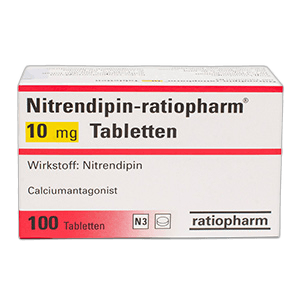
What is nitrendipine?
Nitrendipin is a calcium channel blocker of dihydropyridine type which is particularly well studied for the treatment of isolated systolic hypertension in older patients. The Syst-Eur study has shown that Nitrendipin can reduce strokes by 42% and dementia by 50%.
Nitrendipin is taken twice a day and is available as a generic and under the brand name Bayotensin®. It has an average half-life and acts predominantly on the vascular muscle.
Active Ingredients & Mechanism of Action
Active ingredient: Nitrendipin
Nitrendipin blocks L-type calcium channels in vascular muscle:
Active mechanism:
- Blocks calcium inflow into smooth vascular muscle cells
- Arteries and arteries expand
- Peripheral vascular resistance drops
- Blood pressure drops – especially the systolic value
Special features:
- High vascular selectivity
- Low influence of the heart
- Average half-life (8-12 hours)
- Two daily intake
Clinical meaning:
- strokes reduced by 42%
- dementia reduced by 50%
- Cardiovascular events reduced by 31%
Initiation of action: After 1-2 hours. Maximum effect after 1-2 weeks of regular intake.
Who is it suitable for?
Nitrendipin is suitable for:
- Adults with high blood pressure
- Especially: Isolated systolic hypertension in older patients
Especially recommended at:
- Older patients (over 60 years) with increased systolic blood pressure
- If stroke prevention is at the forefront
- In combination with other blood pressure
Not suitable:
- unstable angina pectoris
- Acute heart attack (first 4 weeks)
- Heavy heart failure
- Heavy aortic stenosis
- Pregnancy and breastfeeding
Available Dosages
High blood pressure:
- start dose: 10 mg once or twice a day
- usual dose: 10-20 mg twice a day
- Maximum dose: 20 mg twice a day (40 mg/day)
Older patients:
- start dose: 5-10 mg once a day
- Slow increase
Available starches:
- 10 mg, 20 mg tablets
How to Take
Intake:
- One to twice a day (morning and evening)
- Independent meals
- With sufficient water
- Avoid grapefruit juice
**
- Regular blood pressure controls
- Headaches and flush can occur at the beginning – usually improve
- In case of severe facial redness doctor inform
- Do not drop abruptly (medical consultation)
Contraindications
**Nitrendipin must not be taken at:* *
- Sensitivity to Nitrendipin or other dihydropyridines
- unstable angina pectoris
- Acute heart attack (first 4 weeks)
- Heavy heart failure
- Heavy aortic stenosis
- Cardiogenic shock
Preview at:
- Liver insufficiency (reduced degradation)
- Tachycardia (reflective heart rate increase)
- Heavy kidney failure
pregnant: Contraindicated. Not sufficiently studied during pregnancy.
Possible Side Effects
Acid (1-10%):
- Headaches
- Face redness (Flush)
- Squeeze
- Heart palp
- Ankle edema
** Occasionally (0,1-1%):* *
- Gastrointestinal complaints
- fatigue
- Tachycardia
- Skin rash
Selten:
- Gum growth (Gingivahyperplasia)
- liver value increases
- Allergic reactions
- Chest pain
- Paresthesia
** Flush and headaches are common at the beginning of therapy, but usually improve after 1-2 weeks. In case of persistent complaints, consult doctor.
Interactions
Preview at:
- Grapefruit juice → increased Nitrendipin level (CYP3A4 inhibition)
- CYP3A4 inhibitors (ketoconazole, erythromycin) → enhanced action
- CYP3A4 inductors (Rifampicin, Phenytoin) → reduced effect
- Other blood pressure counter → increased hypotension
- Digoxin → light mirror increase possible
- Cimetidine → increased Nitrendipin levels
Combinable with:
- ACE inhibitors and sartans
- Beta-blockers (prevented reflextachycardia)
- Diuretics
Alcohol: Strengthens blood pressure-lowering effect. Be careful with simultaneous consumption.
Frequently Asked Questions
Similar Medications

Is nitrendipine right for you?
A licensed doctor will review your information and issue a prescription if suitable. Discreet and secure.
Important Notice
This information does not replace medical advice. If you have questions about your health or the suitability of this medication, please consult a doctor. Read the package leaflet before use.