
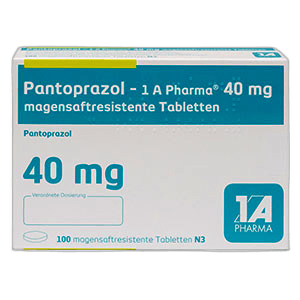
What is pantoprazole?
Pantoprazole is a proton pump inhibitor (PPI) for the treatment of acid-related diseases of the stomach and the esophagus. It is available under the name Pantozol® and as numerous generics.
The particular advantage of pantoprazole compared to omeprazole lies in the lower interaction potential. It affects the enzyme CYP2C19 to a lesser extent and is therefore better combinable with other medicines – especially with the clopidogrel blood platelet inhibitor.
Pantoprazole is one of the most prescribed medicines in Germany.
Active Ingredients & Mechanism of Action
Active ingredient: Pantoprazol
Pantoprazole irreversibly inhibits the proton pump in the document cells:
Active mechanism:
- Prodrug activated in the acidic environment of the document cell
- Covalent binding to the H+/K+-ATPase
- Blocks the gastric acid secretion at the final step
- Acid reduction by up to 90%
Pharmacokinetics:
- Bioavailability approx. 77% (higher than omeprazole)
- Full effect after 2-3 days of regular intake
- Low CYP interaction potential
**Compared to Omeprazole:* * Pantoprazole has a lower affinity to CYP2C19 and CYP3A4, which leads to fewer drug interactions.
Who is it suitable for?
Pantoprazole is suitable for:
- Gastroesophageal reflux disease (GERD)
- Refluxeophagitis
- Gastrointestinal ulcers
- Helicobacter-pylori-Eradikation (combination therapy)
- Gastric protection for NSAID/ASS therapy
- Patients taking Clopidogrel (preferably PPI)
- Zollinger-Ellison Syndrome
Especially suitable for:
- Patients with many accompanying medications (lower risk of interaction)
Available Dosages
Available starches:
- 20 mg (free of prescription)
- 40 mg (prescribed)
Other dosages:
- Sodburning/light reflux: 20 mg 1x daily
- Refluxesophagitis: 40 mg 1x daily for 4-8 weeks
- Gastric protection at NSAID: 20 mg 1x per day
- Helicobacter Eradication: 40 mg 2x daily (with antibiotics)
- Maintenance therapy: 20 mg 1x daily
How to Take
Intake:
- Morning, 30 minutes before breakfast
- Swallow tablet with water
- Gastric juice resistant tablets do not divide
Long-term therapy:
- Regular medical check
- Aim for the lowest effective dose
- In case of flake: gradually reduce dose over 2-4 weeks
**
- Can also be administered intravenously (hospital)
- For liver failure: max. 20 mg daily
Contraindications
**Pantoprazole must not be taken at:* *
- hypersensitivity to pantoprazole or other PPIs
- Simultaneous intake of Atazanavir (HIV drug)
Preview at:
- Heavy liver failure (max. 20 mg, control liver values)
- Long-term use (same risks as other PPIs)
- Suspicion of stomach cancer (Symptome can be masked)
Pregnant period: Limited data. Use only for clear indication.
Possible Side Effects
Acid (1-10%):
- Headaches
- Oversized pain
- diarrhea
- Blocking
- Blowing
Occasionally:
- nausea, vomiting
- Squeeze
- Sleep disorders
- joint pain
For long-term use:
- Magnesium deficiency (muscle cramps, cardiac arrhythmias)
- Increased fracture risk
- Vitamin B12 deficiency
- Possible risk for Clostridium difficile infections
** Side effect profile comparable to other PPIs. Long-term risks affect all proton pump inhibitors alike.
Interactions
Low interaction potential – main advantage of pantoprazole.
Reduced absorption by pH increase:
- Ketoconazole, Itraconazole
- Iron preparations
- Erlotinib
No relevant interaction with:
- Clopidogrel (proportion over omeprazole!)
- Metoprolol
- Nifedipine
- Diazepam
Contraint with:
- Atazanavir (HIV-Protease inhibitor) – loss of effect
Frequently Asked Questions
Similar Medications
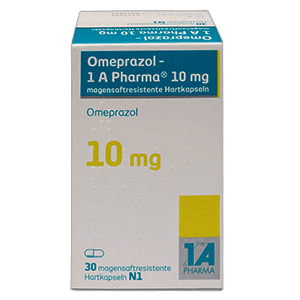
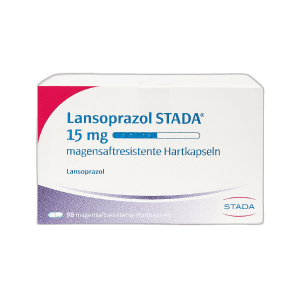
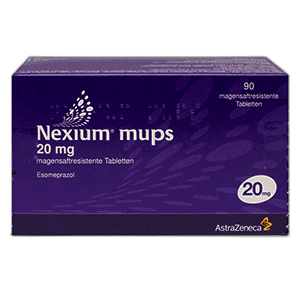
Is pantoprazole right for you?
A licensed doctor will review your information and issue a prescription if suitable. Discreet and secure.
Important Notice
This information does not replace medical advice. If you have questions about your health or the suitability of this medication, please consult a doctor. Read the package leaflet before use.